SOS in Remote Areas: How to Call for Help on the Trail!
Knowing how to call for help on the trail can be the crucial difference between facing a serious problem and ensuring a successful rescue. Knowing the Universal Signals for Help is one of the most important tools for those who enjoy being in natural areas!
If you get lost, feel unwell, or are caught off guard by a change in weather, the golden rule is always to stop, think, observe, and plan how to act to maintain safety until help arrives! The Universal Signs of Distress in natural environments - the SOS in Remote Areas - make you capable of calling for help on the trail!
In remote areas, when we find ourselves in a risky situation, unable to proceed and/or lost, we have three actions to put into practice while we call for help on the trail: PRESERVE life, PREVENT deterioration (avoid worsening the situation), and PROMOTE recovery/stabilization of the situation before and while we wait for rescue to arrive! Having the SOS signs in Remote Areas at the tip of your tongue is essential for anyone who wants to be in nature hiking!
In remote areas, when we find ourselves in a risky situation, unable to proceed and/or lost, we have three actions to put into practice while we call for help on the trail: PRESERVE life, PREVENT deterioration (avoid worsening the situation), and PROMOTE recovery/stabilization of the situation before and while we wait for rescue to arrive! Having the SOS signs in Remote Areas at the tip of your tongue is essential for anyone who wants to be in nature hiking!
And how to call for help on the trail?
Any signal repeated 3 times is internationally recognized as a call for help, regardless of the place and language. This signaling indicates a distress call on the trail, understood worldwide - it is the SOS in Remote Areas.
The most well-known and easiest signals to request help on the trail are:
- SOUND: use a whistle to give 3 short and loud blows, pause for 30 seconds, and repeat the 3 blows. Requesting help on the trail this way is much more effective than shouting, as the sound cuts through the noise of the wind and water without exhausting your energy;
- LIGHT: at night or in low-light areas, give 3 quick flashes with the flashlight, wait for 30 seconds, and repeat;
- VISUAL: if you are in an open area that is easily visible to someone looking from above and/or from a distance, place 3 piles of stones or 3 logs in a triangular shape.
Note: A whistle is the name given to the high-pitched sound produced by a whistle.
Calling for help on the trail with visual signals? We can!
You can signal for help on the trail using visual signals for aerial/distant rescues, used when we spot a helicopter or people in the distance. This is a very common and well-known form of SOS in Remote Areas!
- REFLECTION: use a mirror or the screen of your phone/compass/watch to reflect the sun towards the rescue as a signaling method;
- ARMS in "V": stand with both arms raised forming a "V". This is a universal signal indicating that you need help and works very well when we need to call for help on the trail. Never just wave your arms, as this can be confused with a "hello";
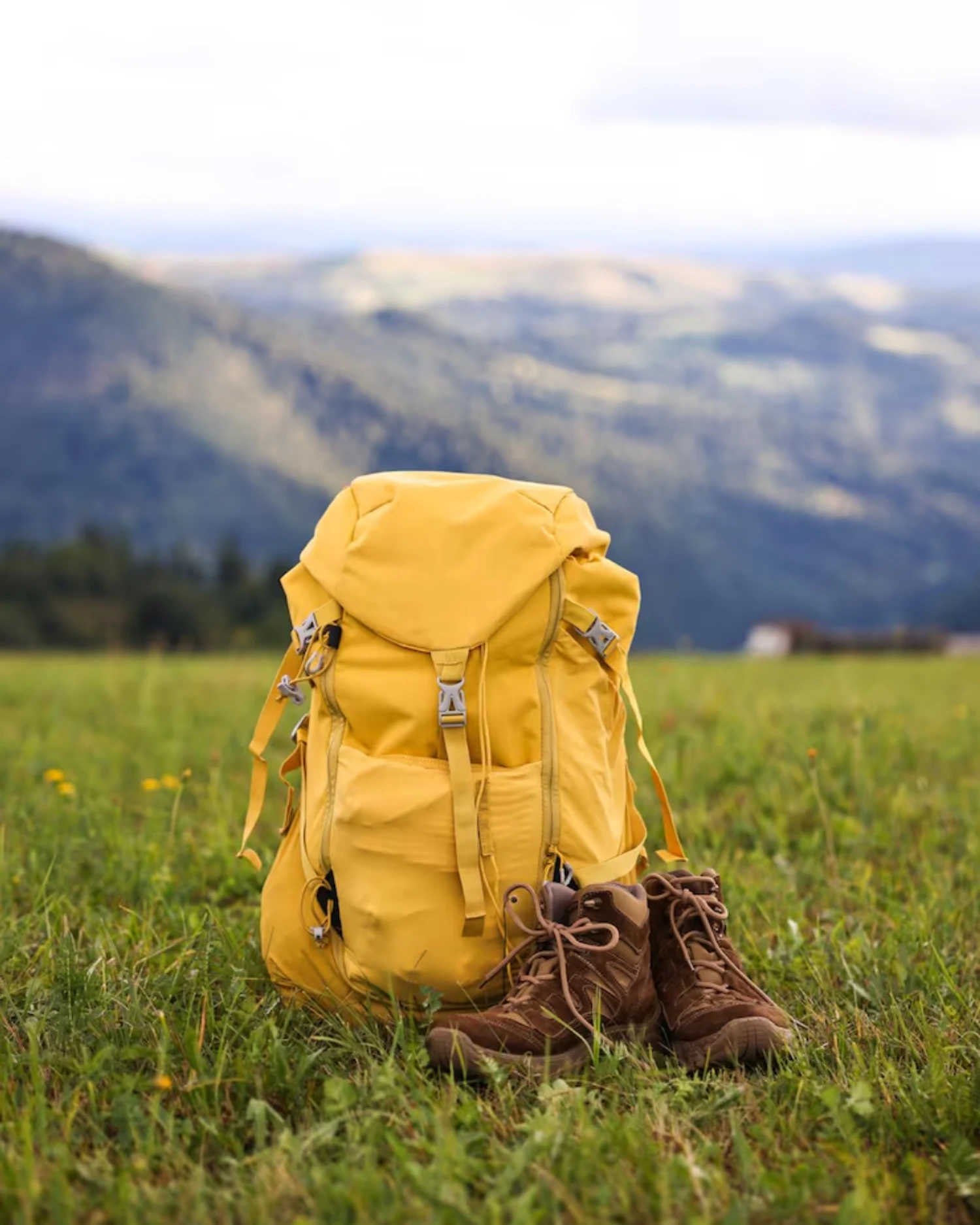
- VIBRANT COLORS: spread out a raincoat, the tent fly, an open jacket, or a brightly colored backpack in an open area. The colors orange, red, or yellow are the most visible and used when we need to trigger an SOS in Remote Areas!
How to call for help on the trail using your cell phone!
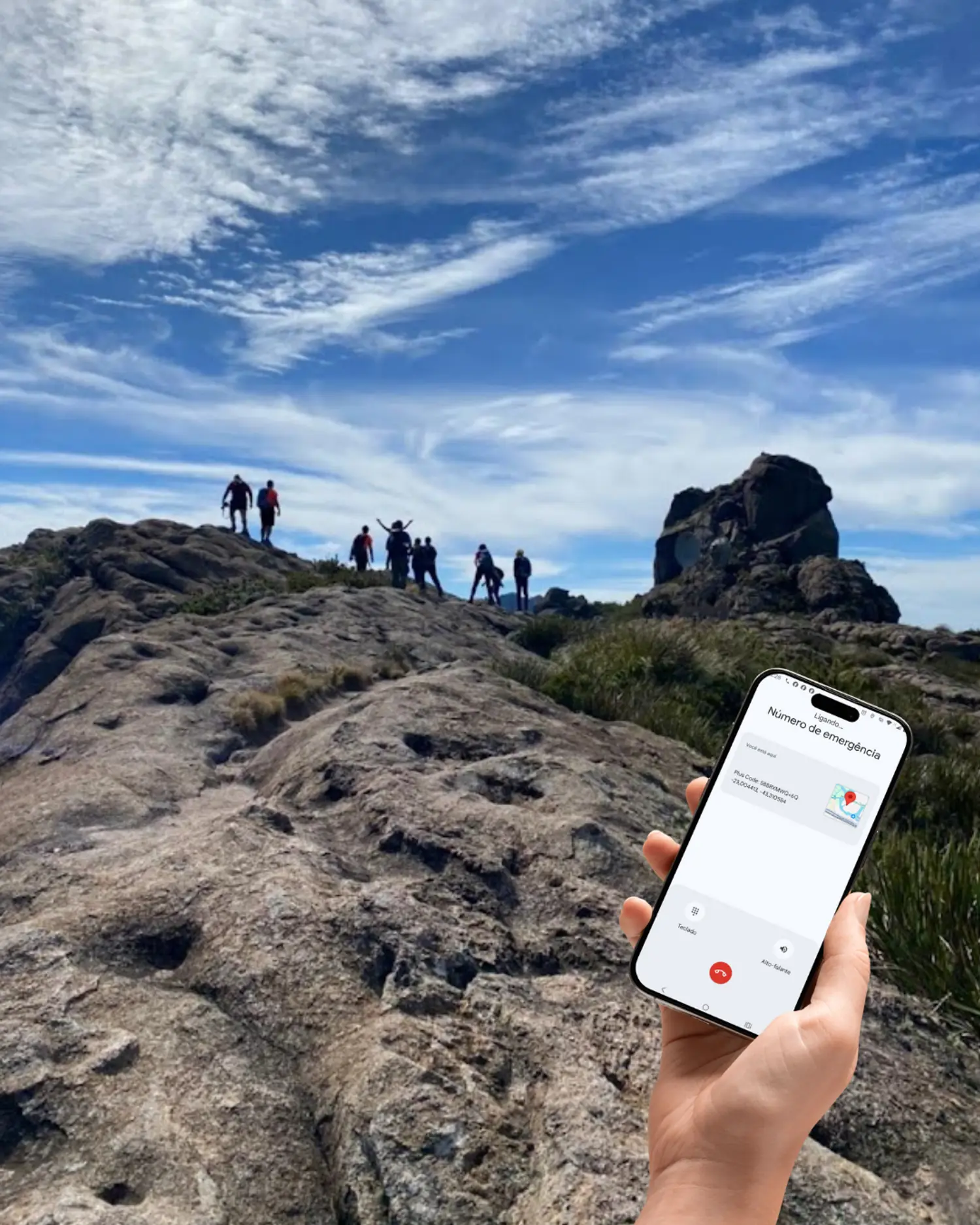
You can use a cell phone or similar device, even without a signal, to call for help on the trail! This tool can be very helpful in these moments!
- Call 193 (Fire Department): in Brazil, this is the main number for rescue. Generally, cell phones are set up to use any available local network to connect emergency calls, not just your carrier's. This makes it easier to send an SOS in remote areas;
- Airplane Mode: if you are lost, put your phone in airplane mode to save battery and only disable it to try to contact at high points or with some type of signal, to call for help on the trail;
- SMS/WhatsApp: text messages require less signal usage than calls. Send your location (Google Maps or WhatsApp) and a quick description of the problem to the system for whom you are calling for help on the trail: the local rescue system, Fire Department, or that trusted person you informed about your activity, the location, and what time you should be back.
Extra tips when asking for help on the trail:
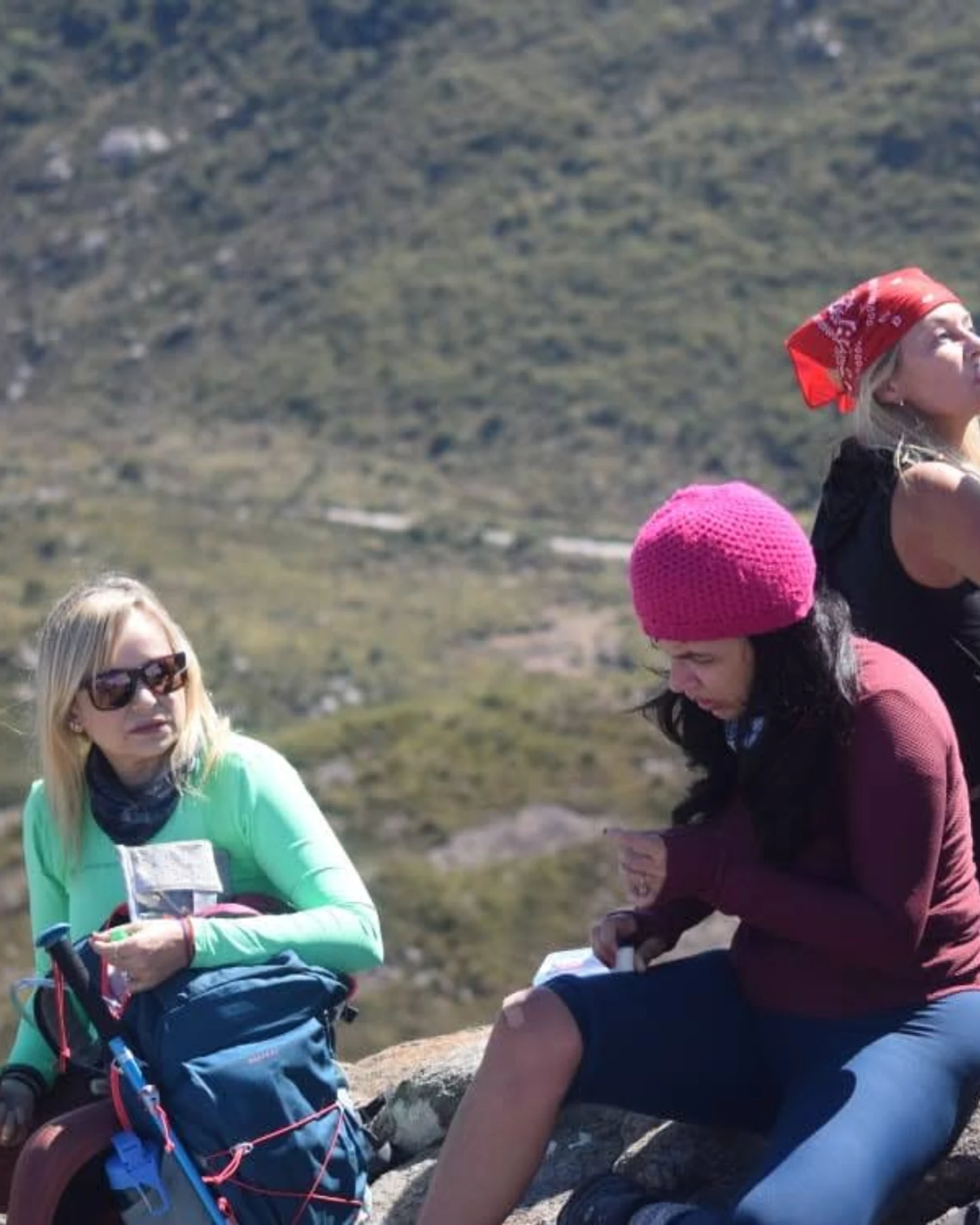
Are you on the trail and encountered a problem? Note these tips on immediate actions when in situations of risk, danger, or difficulties and need to activate SOS in Remote Areas:
- LOST: if you are lost on the trail and don’t know where to go? Stop immediately. Stay in a sheltered, visible, and dry location. Trying to "find your way" usually leads you deeper into the woods and makes it harder for rescue teams to find you as you move. When calling for help on the trail, wait where you are or in a nearby sheltered location;
- HEAVY RAIN: stay away from watercourses and waterfalls (risk of flash floods) and from slopes and hillsides (risk of landslides). Seek shelter, but avoid staying under trees and isolated rocks due to lightning (any large, solitary element in an open area becomes a lightning rod);
- Discomfort, Injury, Accident: if you feel dizziness or extreme fatigue, stop, hydrate, and eat something salty or sweet. In case of an accident/injury, provide basic first aid in natural environments. And in all cases, if it is not possible to proceed safely, activate the SOS protocols in Remote Areas, maintaining life preservation actions while waiting for help to arrive.
Your safety depends on your decisions!
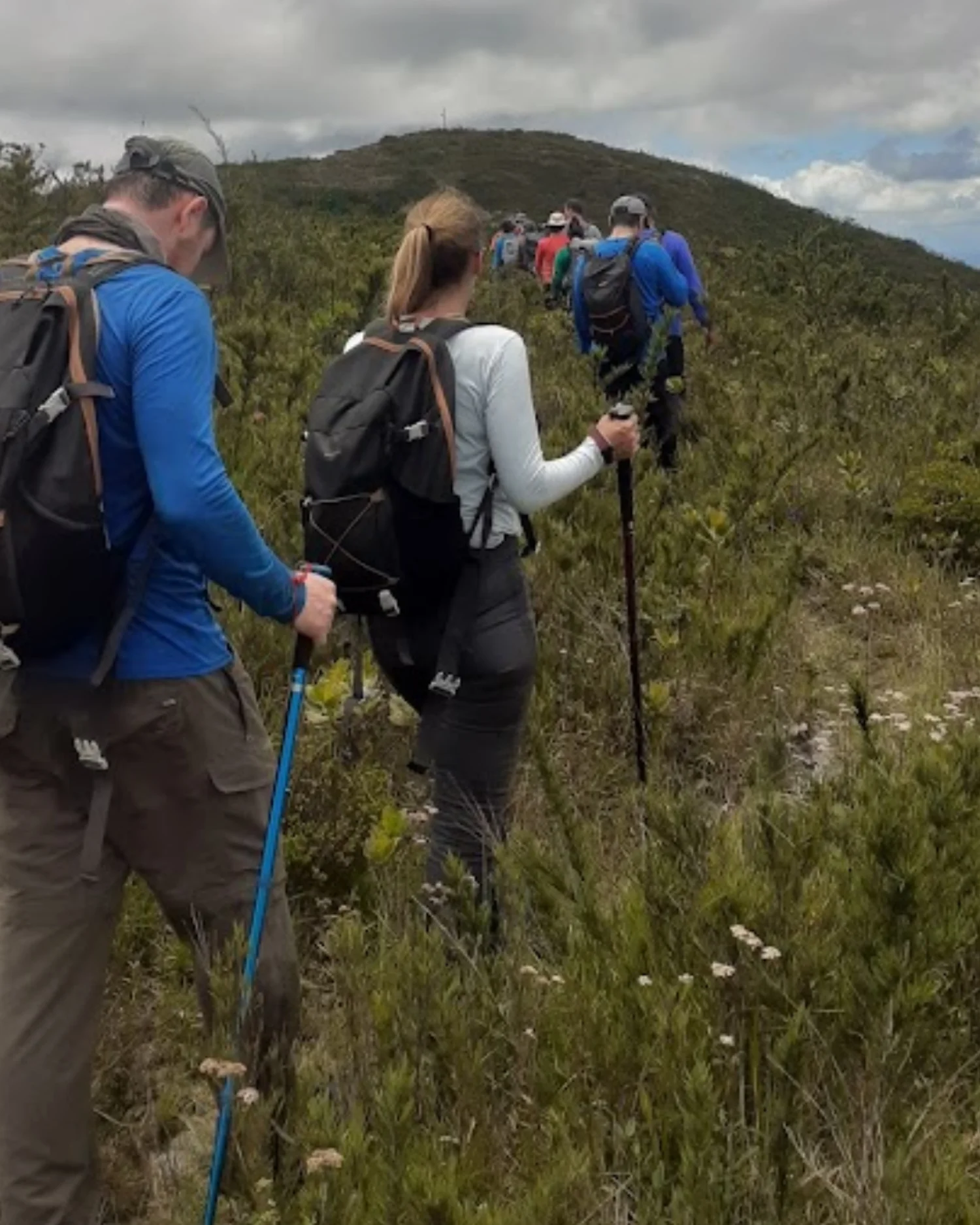
Being in natural areas requires responsibility. The adventure is only complete when the return is safe and we know at least the basics of how to call for help on the trail and how to act in emergencies. Being prepared is one of our best pieces of equipment!